
How agents win landowner mandates in 2026
Landowners in 2026 have seen every glossy masterplan. What they have not seen enough of is a residual land value they can trust, produced fast enough to still be relevant when the next offer lands. Exclusive mandates now go to the advisor who can put numbers on the table — not the one with the nicest render.
What “numbers on the table” means
- A use and product mix the planning envelope can actually carry.
- GDV by price quartile, not a single heroic ASP.
- Development cost and peak funding, so the landowner sees why the residual is the residual.
- A base / downside case — because the first question will be “what if sales slow?”
Speed is part of the pitch
If it takes three weeks to produce a feasibility pack, you are pitching last month’s market. Agents who can turn a site into a structured study in a sitting — and iterate live when the landowner changes height, mix, or hold-versus-sell — win the room.
The agents who close exclusive mandates aren’t the ones with the flashiest decks — they’re the ones who walk in with numbers on the table.
FeasiBuild was built for that meeting. Run the site, export the deck, leave the residual on the table. The first report is free.
Slide deck
Download the slide deck (PDF)Run this analysis yourself — first report free at feasibuild.app
Start your first reportRelated posts

Institutional-grade feasibility studies in minutes
From assumptions to a bankable feasibility report — without the weeks, the consultants, or the $10K+ price tag. FeasiBuild is live.
10 Sep 2026 • 5 min read

What FeasiBuild actually does
The AI financial engine for real estate development. You input your project data once. It handles the rest.
8 Sep 2026 • 6 min read
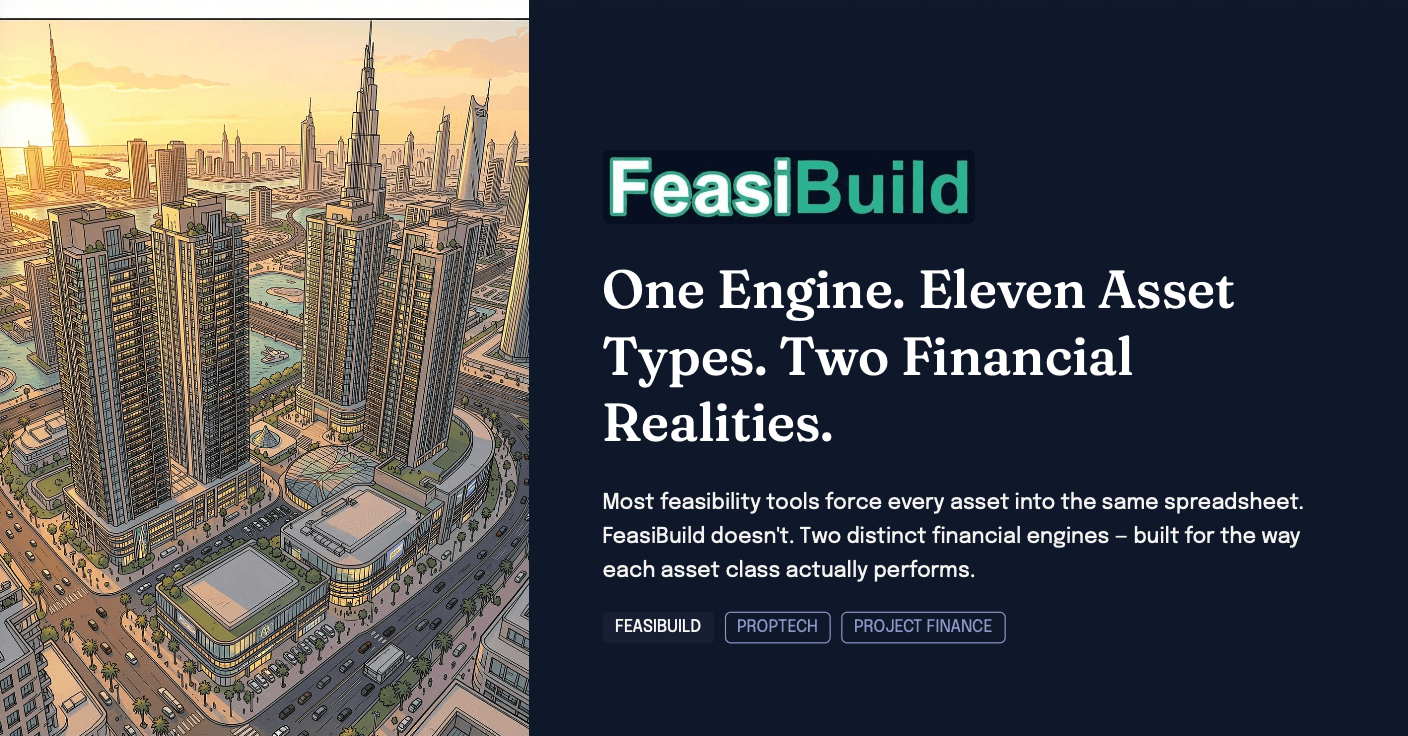
One engine. Eleven asset types. Two financial realities.
Most feasibility tools force every asset into the same spreadsheet. FeasiBuild doesn’t. Two distinct financial engines — built for the way each asset class actually performs.
5 Sep 2026 • 7 min read